Submission Will be Closed (27 September 2026)
User login
Submission Templates
Please use the correct template
Track 1-4:
Abstract Template
Full Paper Template
Track 5:
Under Construction
Track 6:
Under Construction
ICO-NUSA26 Flyers
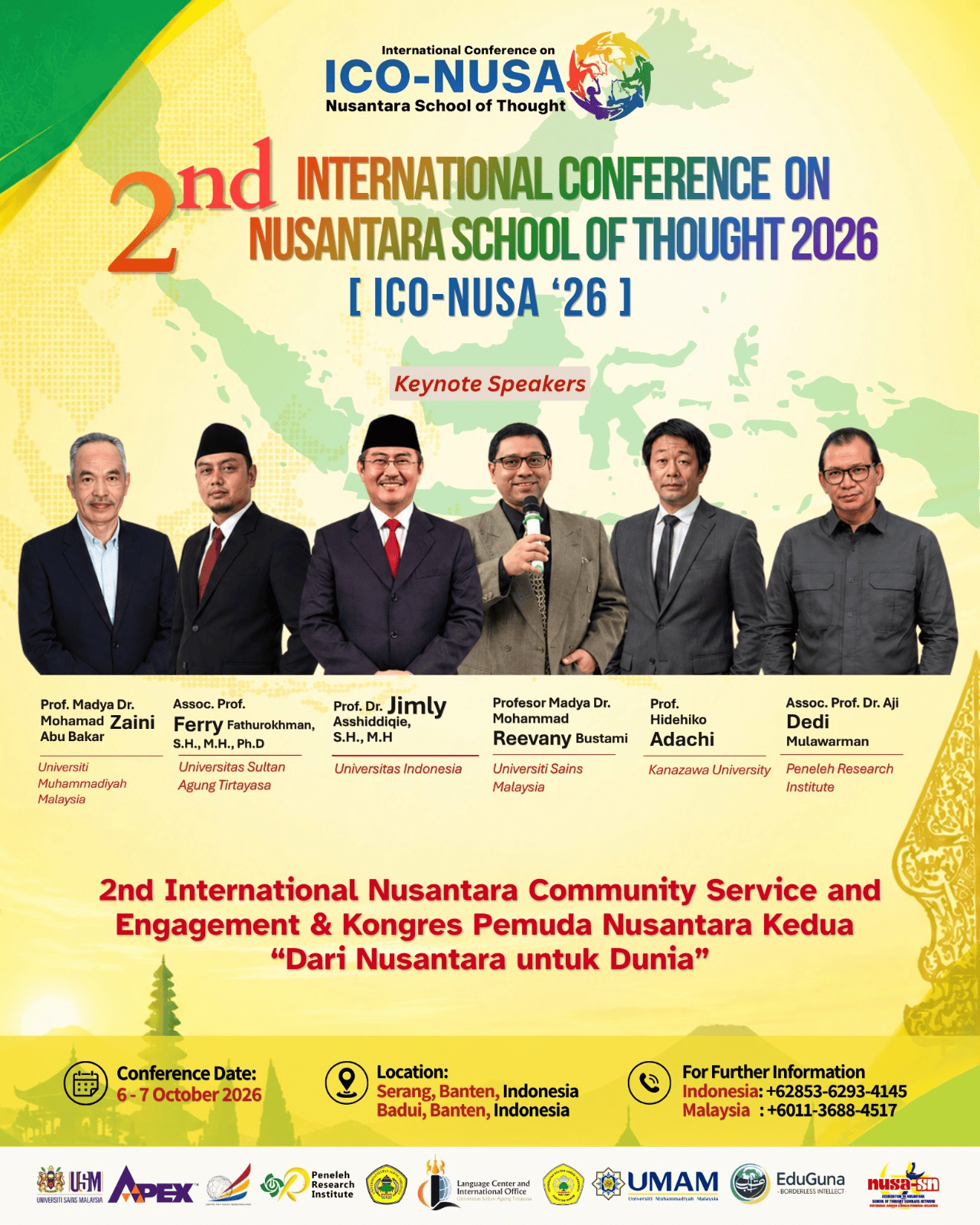
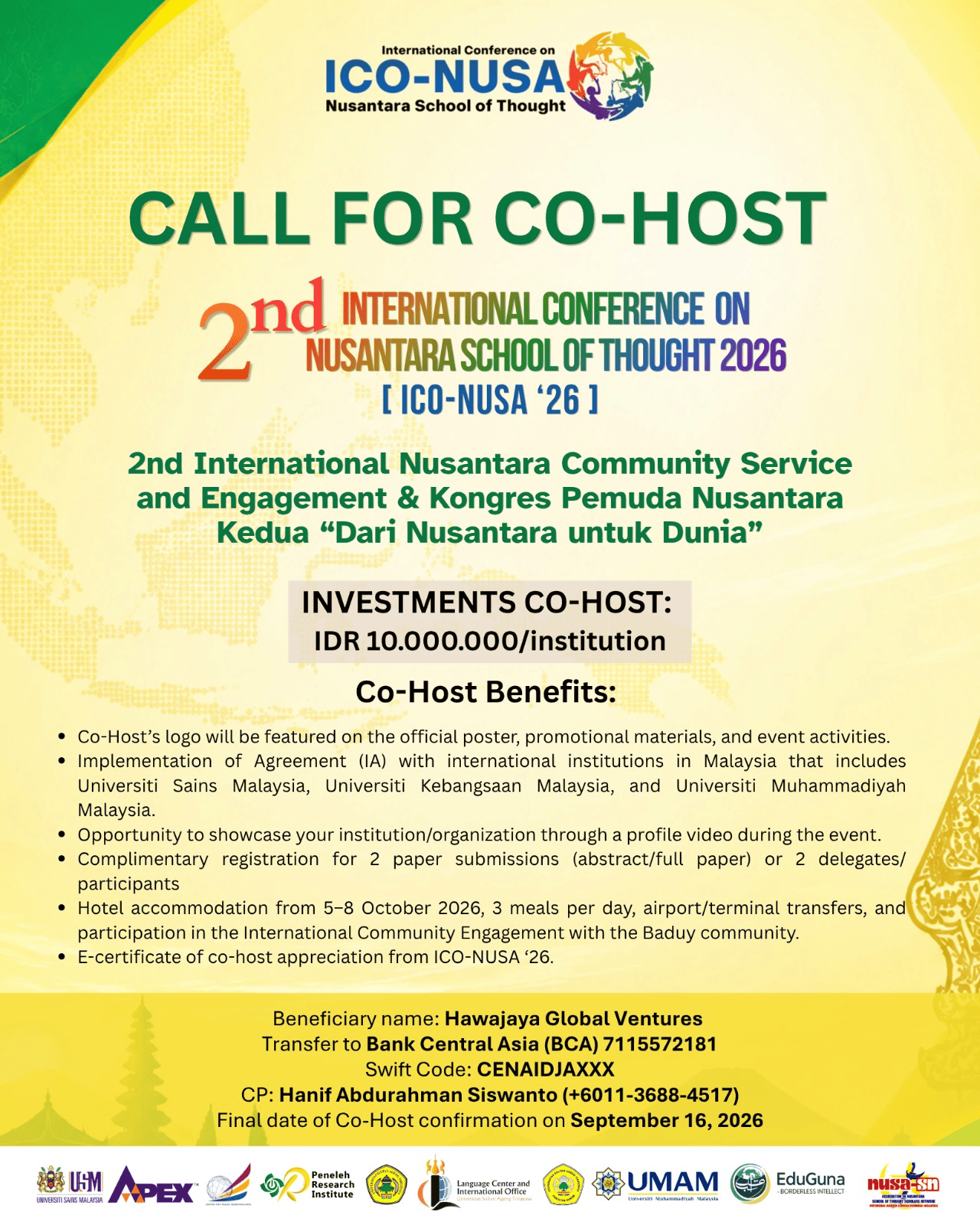
ICO-NUSA26 Submission and Review System
| You have to login to submit ICO-NUSA papers. For the first time user, you need to create author account. If you forgot your password, request new password. |
Developed as a collaborative work with the Paper Review and Submission System (REMIT), ICO-NUSA26 platform is designed to streamline participation in the 2nd International Conference on Nusantara School of Thought and Community Engagement. By integrating REMIT’s proven framework with conference-specific needs, the system ensures efficiency, fairness, and academic rigor across all stages.
-
Conference Presenters (Tracks 1–4) Kindly submit your abstract or full paper under one of the available academic tracks (Track 1–4).
-
Youth Forum Participants (Track 5) Kindly submit a brief narrative highlighting the issue or perspective on Nusantara that you would like to raise in the Youth Forum at Track 5.
-
Arts Performers (Track 6) Individuals or institutions wishing to perform are invited to submit a short explanation of the proposed arts performance at Track 6.
-
Participant Only (Click Here) Individuals who wish only to attend the event without presentation are kindly requested to register by submitting and paying participant only fee by clicking here.
Any inquiries or further information about ICO-NUSA26 Submission and Review system, contact us at +6011-3688 4517 or +62 812-3526-0217 via WhatsApp
Track 1: Nusantara Legal and Policy Studies
This track explores the dynamic relationship between law, governance, and public policy within the diverse societies of the Nusantara region. It welcomes interdisciplinary discussions on various branches of law, including criminal law, civil law, international law, constitutional law, administrative law, and Islamic law, alongside studies of customary legal traditions, human rights, environmental regulation, and public administration that shape social order and justice across the archipelago. Participants are also encouraged to examine contemporary legal and policy challenges such as digital governance, sustainable development, migration, social equity, legal reform, and regional cooperation in Southeast Asia. By connecting historical foundations with emerging policy innovations, this track highlights how legal systems and public institutions can strengthen democratic values, uphold justice, foster social harmony, and support inclusive development in both local and global contexts.
Track 2: Nusantara Social Sciences
This track focuses on the evolving social realities, identities, and community dynamics of the Nusantara region through the perspectives of sociology, anthropology, political science, communication studies, education, economics, and other related disciplines. It welcomes studies on social transformation, religion and society, youth culture, gender relations, migration, digital communities, local wisdom, and community resilience in responding to contemporary challenges. Participants are encouraged to engage with both classical and emerging social science approaches to better understand how Nusantara societies negotiate tradition, modernity, and globalization. By fostering critical dialogue and interdisciplinary perspectives, this track aims to deepen understanding of the social forces that shape collective life and promote sustainable and inclusive futures across the archipelago.
Track 3: Nusantara Arts and Humanities
This track celebrates the rich cultural expressions and intellectual traditions of the Nusantara region. It welcomes explorations of literature, philosophy, performing and visual arts, oral histories, and community practices that have shaped identities across the Malay Archipelago. Alongside these traditions, participants are invited to engage with contemporary humanities research and artistic innovations that respond to today’s social, cultural, and political realities. By connecting heritage with modern creativity, this track highlights how arts and humanities can foster dialogue, strengthen solidarity, and inspire new ways of imagining Nusantara in a local and global context.
Track 4: Nusantara Science and Technology
This track highlights the diverse ways science and technology are applied and imagined across the Nusantara region. It welcomes both modern innovations such as renewable energy, sustainable design, and rural applied technologies, as well as traditional knowledge systems that have long guided communities in managing energy, environment, and resources. By bridging contemporary research with local practices, participants will explore how indigenous technologies, community-led solutions, and modern scientific approaches can complement each other. The focus is on theoretical and conceptual applications that strengthen resilience, empower rural communities, and reflect the archipelago’s unique blend of heritage and innovation.
Track 5: Nusantara Youth Forum
Under construction
Track 6: Nusantara Arts Performance
Under construction
Scientific Committee
Indonesia
 Assoc. Prof. Dr. Aji Dedi Mulawarman
Universitas Brawijaya (UB) & Peneleh Research Institute (PRI), Indonesia
(Financial Accounting, Islamic Accounting, History of Accounting Thought) |
 Assoc. Prof. Dr. Ari Kamayanti
Politeknik Negeri Malang & Peneleh Research Institute (PRI), Indonesia
(Qualitative and Multi-method Research, Islamic Accounting, Business Ethics) |

Ms Chaula Luthfia
Universitas Sultan Ageng Tirtayasa Serang, Indonesia
(civil Law) |
 Assoc. Prof. Dr. Eva Johan, SH., MH.
Faculty of Law, Universitas Sultan Ageng Tirtayasa (UNTIRTA), Indonesia
|
 Assoc. Prof. Ferry Fathurokhman, SH., MH., Ph.D.
Faculty of Law, Universitas Sultan Ageng Tirtayasa (UNTIRTA), Indonesia
(Criminal Law, Criminology, International Criminal Law) |
 Assoc. Prof. Ikomatussuniah, SH., MH., Ph.D.
Faculty of Law, Universitas Sultan Ageng Tirtayasa (UNTIRTA), Indonesia
(Law and Legal Studies, Legislation, Law Enforcement, Licensing, Administrative Law) |
 Mr Muhamad Romdoni, S.H., M.H.
Universitas Sultan Ageng Tirtayasa, Indonesia
(Legal Studies) |
 Dr. Novrida Qudsi Lutfillah, SE., Ak., MSA., CA
Politeknik Negeri Malang & Peneleh Research Institute (PRI), Indonesia
|
 Mr. Rajih Arraki', M.Soc.Sc
Universitas Muhammadiyah Malang (UMM), Indonesia
(Sociology of Migrant Workers, Sociology of Religion) |
 Prof. Ir. Waluyo Adi Siswanto, M.Eng., Ph.D., IPM
Universitas Muhammadiyah Surakarta (UMS), Indonesia
(Computational Mechanics, Finite Element Analysis and Modelling, Impact Mechanics, Sheet Metal Forming Simulation, Structural Optimisation) |
Malaysia
 Dr. Fara Dayana Mohd Jufry
Universiti Sains Malaysia (USM), Malaysia
(Performing Arts) |
 Ts. Hafeezur Rahmaan Bin Mohd Yassin
Universiti Sains Malaysia (USM), Malaysia
(CAD/CAM/CAE Applications in Manufacturing, Wood Furniture Design and Technology, Consumption and Everyday Life) |
 Mr. Hanif Abdurahman Siswanto
Universiti Sains Malaysia (USM), Malaysia
(International Relations, Sociology of Migration, International Politics of Migration) |
 Assoc. Prof. Dr. Mohammad Reevany Bustami
Universiti Sains Malaysia (USM), Malaysia
(Sociology, Anthropology, Corporate Social Responsibility, History) |
 Dr. Muhammad Asyraf Mohd Bakri
Universiti Sains Malaysia (USM), Malaysia
(Arts, Design, Assistive Technology) |
 Dr. Nazimin Nazeri
Universiti Pendidikan Sultan Idris (UPSI), Malaysia
(Sound Art Design and Technology, Creative Music Technology) |
 Dr. Syed Ahmad Aidil Adha Said Mad Zain
Universiti Teknologi MARA (UiTM), Malaysia
(Computational Mathematics, Computer Aided Geometric Design, Applied Mathematics ) |
 Dr. WAHYUNI MASYIDAH BINTI MD ISA
Universiti Malaya, Malaysia
(Visual Culture, Visual Arts, Arts-Biomechanics, applied Arts) |
Authors who submit to this event agree (if the papers are accepted) to the following terms:
Terms of submission
Papers must be submitted on the understanding that they have not been published elsewhere (except in the form of an abstract or as part of a published lecture, review, or thesis) and are not currently under consideration by another journal published by any publisher. The submitting author is responsible for ensuring that the article's publication has been approved by all the other co-authors. It is also the author's responsibility to ensure that the articles emanating from a particular institution are submitted with the approval of the necessary institution. Only an acknowledgment from the editorial office officially establishes the date of receipt. Further correspondence and proof will be sent to the author(s) before publication unless otherwise indicated. It is the condition of submission of a paper that the authors permit editing of the paper for readability.
Copyright Notice
Authors who publish with this journal agree to the following terms:
- Authors retain copyright and grant the journal right of first publication with the work simultaneously licensed under a Creative Commons Attribution License that allows others to share the work with an acknowledgement of the work's authorship and initial publication in this journal.
- Authors are able to enter into separate, additional contractual arrangements for the non-exclusive distribution of the journal's published version of the work (e.g., post it to an institutional repository or publish it in a book), with an acknowledgement of its initial publication in this journal.
- Authors are permitted and encouraged to post their work online (e.g., in institutional repositories or on their website) prior to and during the submission process, as it can lead to productive exchanges, as well as earlier and greater citation of published work.

Peer Review Process
The submitted papers will be evaluated by the committee to check the suitability of the papers with the conference's focus and scopes. Afterward, all papers that have passed the initial review by the committee, will be single-blindly reviewed by two reviewers before the presentations. When the papers are continued by publication process, the authors are given a chance to submit the final version no later than 10 days after the conference date. Once they pass the presentation, then the articles will be sent to the committee for content review before collected to be submitted to Internationally Indexed Proceeding.
Initial Review
The track director evaluates each manuscript in the submission track to determine if its topic and content is suitable for consideration for the conference before being reviewed. Manuscripts that do not meet minimum criteria are returned to the authors. This is in the best interest of the authors who could then decide to either correct the problems or to submit the manuscript to a more appropriate venue, avoiding delays from a lengthy review process that would nonetheless lead to rejection.
Peer Review
Manuscripts that pass the initial review by the Track Directors, will be sent to several referees based on their expertise. Each manuscript is reviewed by at least two referees. The referees are asked to evaluate the manuscript based on its originality, soundness of methodology, impact to design research, and relevance to design practices. To facilitate timely publication, referees are asked to complete their reviews and provide individual critiques within two weeks. After collecting the referees' reports, the Track Director makes a recommendation on the acceptability of the manuscript.
Acceptance Decision
Based on the referees' comments, the Track Director makes a final decision on the acceptability of the manuscript and communicates to the authors the decision, along with referees' reports. The status reports to reviewers should identify the reviewers of each paper, the final decision can be "Accept Submission", "Revisions Required", or "Decline Submission." The revised version should be submitted considering the review comments.
Plagiarism
The authors should make sure that the manuscript pass a criterion of less than 20 percents similarity to other publications.
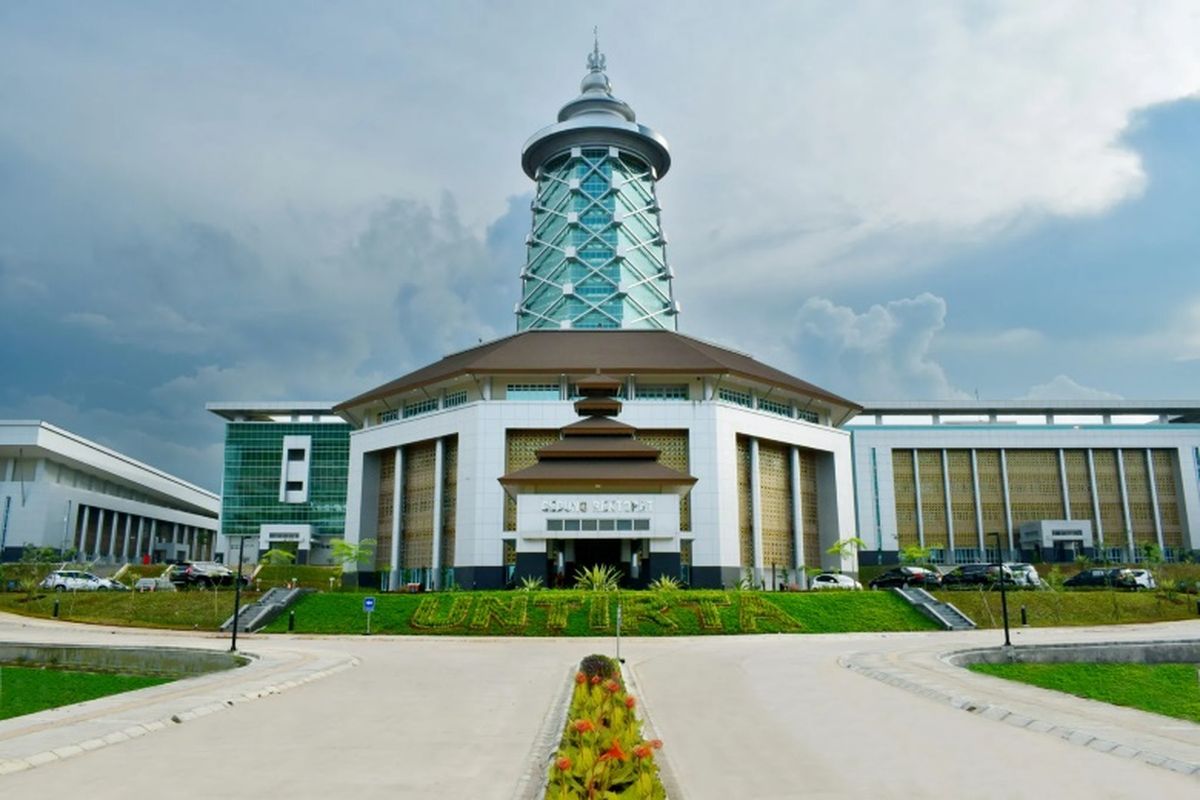
Offline Conference
|
|
|
Online Conference
 |
Online Conference will be conducted via zoom, in a room that all presenters and the participants can interact each other in an synchronized mode. The link will be provided, two days before the conference. |